Fixed-Price vs Cost-Plus Quotes: What Toowoomba Homeowners Should Know Before Signing

When you collect renovation quotes, the bottom line is only part of the story. How the price is built matters just as much, because it decides how much certainty you have once work begins.

Here's a plain-English look at the main ways builders price work, and what to check before you sign. This is general information, not legal advice, so for anything significant it's worth checking the QBCC's guidance or getting independent advice.

What a fixed-price quote means

With a fixed-price contract, you agree a total price for a defined scope of work before the job starts. If the builder's costs run over on the agreed scope, that's the builder's problem rather than yours. If you change the scope, the change is priced and agreed separately as a variation.

That's why we quote fixed-price. You know where you stand before the first day on site, and it's much easier to compare one fixed quote against another.

What a cost-plus contract means

In a cost-plus contract, you pay the actual cost of materials and labour plus an agreed margin or fee. The final price can't be known when you sign, because it depends on what the work ends up costing.

Some owners like the flexibility, particularly on complex or uncertain jobs. The trade-off is budget risk. The QBCC points out that with cost-plus arrangements the final price is unknown at signing and recommends getting legal advice first, and that some protections under the Queensland Home Warranty Scheme may not apply in the same way. If you're considering one, check the details with the QBCC before you sign.

Why scope and allowances matter more than the label

Even a fixed-price quote can turn into surprises if the scope is vague. Look for:

  • A clear description of the work, including what's demolished, built and finished
  • Inclusions and exclusions, so you know what the price covers
  • Allowances for items you haven't chosen yet, such as tiles, tapware and appliances, with a realistic dollar figure
  • How variations are handled, in writing, before the work is done

A very low price often means something has been left out. If one quote is far below the others, ask why.

What Queensland requires in writing

In Queensland, domestic building work needs a written contract, signed and dated by both parties before work starts. For larger jobs the contract has to include more detail, such as the contractor's licence number, the site address, a description of the work, the price or how it's worked out, and the key dates. The QBCC sets out the requirements for different job sizes, so check what applies to yours.

Work over a certain value also involves Queensland Home Warranty Scheme insurance. The QBCC currently sets that threshold at $3,300 including materials, labour and GST, and the premium is generally collected through the principal contractor. Your builder should explain it clearly.

Questions to ask any builder about price

  • Is this a fixed-price quote, and what exactly does it cover?
  • What allowances are included, and who decides if we go over?
  • How do you price and approve variations?
  • What's the payment schedule, and what stage does each payment relate to?
  • Is home warranty insurance included, and how is it handled?

If you'd like more on comparing builders, see our guide on how to choose a local builder in Toowoomba, and our explainer on what a QBCC licence actually means.

Residential and small commercial

The same principles apply whether you're renovating a home or fitting out a small shop or office. We do both, and every job gets a clear, fixed-price quote with the scope spelled out.

Ready to talk?

If you'd like to see what a clear fixed-price quote looks like, get in touch with Toowoomba Renovations. We'll look at your job, talk through the scope and give you straight answers. You can also read about what we do.

Toowoomba Renovations Pty Ltd holds a current QBCC licence (15059227) in Carpentry and Builder – Low Rise, and we're proud members of Master Builders Queensland.
Read more renovation advice

Do You Need Council Approval to Renovate in Toowoomba? Decks, Carports, Extensions and More

"Do I need approval for this?" is one of the first questions we hear, and it's a good one to ask early. Approvals can affect your timeline, your design and your budget, so it pays to understand them before you fall in love with a plan.

This is a general guide, not legal advice. The rules depend on your block, your zoning and the exact work, so always confirm with Toowoomba Regional Council or a private building certifier before you commit. Here's how it usually works.

When building approval is usually needed

Toowoomba Regional Council says building approval may be needed depending on the size and nature of the work, and that applies whether a licensed builder or a DIYer does it. A few examples that commonly need approval:

  • Building an extension or addition to the house
  • Installing a deck
  • Adding a covered area such as a carport, patio roof or shade structure
  • Replacing or repairing roofing
  • Enclosing a deck, verandah or covered area, whether partly or fully

Some minor work is self-assessable and doesn't need a permit, but don't assume your job falls into that group. If in doubt, ask before you start.

Enclosing a space changes the rules

Closing in a verandah or deck is a classic example of a small-looking change with big consequences. A partly enclosed area is generally treated more lightly than a fully enclosed, habitable room, which needs to meet more requirements, including a minimum ceiling height. If you're thinking about turning an outdoor area into a living space, raise it at the very start so the design can be done properly.

Who assesses the approval?

You generally have two options. You can use a licensed private building certifier, who lodges the application, carries out inspections at each stage and issues the final certification. Or you can lodge with council, which then inspects the work. Both paths lead to the same result: independent sign-off that the work meets the building rules.

Your builder can usually coordinate this for you, which takes a lot of the paperwork off your plate.

Beyond the building approval

Building approval isn't always the only box to tick. Depending on your property and project, you may also need to think about:

  • Zoning, overlays and setbacks. These decide what can be built and how close to boundaries.
  • Plumbing approvals. Bathroom, laundry and kitchen changes that move plumbing involve a licensed plumber and their own approval.
  • Services and trees. Check for underground services before any digging, and be aware of any tree protection on your site.
  • Site conditions. Driveways, crossovers, stormwater and sewer or water mains can all affect where and how you build.

How a good builder helps

Approvals shouldn't be a surprise halfway through a job. When we price a project, we look at what approvals it will need, who will handle them and how long they might take, then build that into the scope and the program. That's one reason fixed-price quotes work well: the paperwork is accounted for upfront rather than discovered later.

If you're still weighing up your options, it's worth reading our guides to home extensions in Toowoomba and how long a renovation takes, since approvals are a big part of the timeline.

Quick checklist before you start

  • Describe the work clearly, including any enclosing or roofing
  • Check your zoning, overlays and boundary setbacks
  • Ask your builder who is handling approvals and certification
  • Allow time in your plan for approvals before work begins
  • Keep copies of every approval and final certificate

Residential and small commercial

The same questions apply to shopfronts, offices and other small commercial fit-outs, although commercial work has its own rules. We take on both, so if you're not sure where your project sits, just ask.

Ready to talk?

If you're planning a renovation, extension or fit-out and want to know what's involved, get in touch with Toowoomba Renovations for a fixed-price quote. We'll look at the job, explain what approvals are likely and give you straight answers. You can also see what we do.

Toowoomba Renovations Pty Ltd holds a current QBCC licence (15059227) in Carpentry and Builder – Low Rise, and we're proud members of Master Builders Queensland.
Read more renovation advice

How Long Does a Renovation Take in Toowoomba? What Affects Your Timeline

It's usually the first thing people ask: how long is this going to take? It's a fair question, because a renovation affects your home, your routine and sometimes your business. The honest answer is that it depends, but it depends on things you can understand and plan for.

Here's what drives a renovation timeline, how most jobs are staged, and what you can do to keep things moving.

Why there's no single answer

A small bathroom refresh and a full home renovation are completely different projects. Even two bathrooms of the same size can take different amounts of time, depending on the age of the house, what's behind the walls, the finishes chosen and how long materials take to arrive.

Anyone who promises an exact date before seeing your home should be treated with caution. What you should expect is a clear program with your quote, and regular updates as the job moves along.

The main things that affect timing

Size and complexity. Moving walls, changing layouts and rearranging plumbing take more time than updating finishes in place.

Approvals. Some jobs need building approval before work can start. That happens before the first day on site, so it's worth starting early.

Lead times. Custom cabinetry, stone benchtops, windows, tiles and some appliances are made or ordered to suit. These are often the longest waits in a renovation, and the reason decisions need to be made early.

The age of the house. Older homes can hide surprises such as old wiring, plumbing or materials that need careful handling. We'd rather flag the possibilities at the quote stage than be surprised on site.

Weather. Roofing, external works and concrete are all affected by rain, so allow some flexibility on outdoor stages.

Decisions. Late changes are one of the biggest causes of delay. A change to a fixture or layout can mean reordering materials and rebooking trades.

How a typical renovation is staged

Most jobs follow a similar order:

  1. Planning and quoting. Site visit, scope, fixed-price quote and any approvals.

  2. Ordering and scheduling. Long lead items are ordered and trades are booked.

  3. Strip-out and prep. Old fixtures and finishes are removed, and any structural changes are made.

  4. Rough-in. Plumbing, electrical and any other services are run by licensed trades.

  5. Linings and waterproofing. Walls and ceilings go up, and wet areas are properly sealed.

  6. Fit-out and finishes. Cabinetry, tiling, painting, fixtures and appliances are installed.

  7. Final fit-off and handover. Final checks, touch-ups and a walkthrough with you.

Each stage depends on the one before it, which is why good scheduling matters so much.

Planning for the wait before work begins

People often forget that the work before the work can take a while. Getting quotes, finalising your plans, choosing materials and waiting for a start date all take time. If you're hoping to be finished before Christmas, a family event or the start of a lease, work backwards from that date and allow some buffer.

Living through it

A renovation is easier when you've planned for it. If it's a kitchen, set up a temporary space. If it's a bathroom, work out where you'll shower. For a bigger job, ask your builder how the work will be staged, and where you'll be able to live comfortably in the meantime.

How to avoid delays

  • Make your key decisions early, especially on items with long lead times

  • Settle your scope before work starts rather than changing it halfway

  • Make sure the builder can get access to the site when needed

  • Keep communication open, and raise questions as soon as they come up

  • Be flexible on the small stuff and firm on the things that really matter

What about small commercial jobs?

If you run a business, timing is even more important because the space is often still trading. We plan commercial work around your hours where we can, with staging and after-hours work if needed. It's something to raise early, so it can be built into the program.

Want a realistic timeline for your project?

The best way to get a realistic timeline is to talk through your specific job. Get in touch with Toowoomba Renovations for a fixed-price quote and we'll give you a clear scope and program. You can also see how it works for a bathroom renovation or a kitchen renovation, or read about what we do.

Toowoomba Renovations Pty Ltd holds a current QBCC Builder – Low Rise and Carpentry licence (15059227).

Read more renovation advice

How to Choose a Local Builder in Toowoomba: Questions to Ask Before You Sign

Choosing a builder is probably the biggest decision in your renovation. The right one makes the whole process smoother, and the wrong one can turn a good plan into months of stress.

Quotes can look similar on paper, so it pays to dig a little deeper. Here's how we'd go about it if we were on your side of the table.

Start with the basics: licence and insurance

Before anything else, check that the builder is properly licensed for the work you're planning. In Queensland that means a current QBCC licence in a class that covers your job, and home warranty insurance where it applies. It takes a couple of minutes on the QBCC website, and any good builder will happily give you their licence number.

If you want the detail, we've covered what the QBCC licence means for your renovation in a separate post.

Ask to see recent, similar work

A builder who is great at new homes might not be the best choice for a bathroom in a 1960s house, and vice versa. Ask for photos of recent jobs similar to yours, and ask what the home was like before. You're looking for tidy finishes, sensible detailing and projects that look like the ones you have in mind.

Talk to past clients

References matter, so ask for one or two recent clients you can speak to. Good questions to ask them include: Did the job finish on time? Was the price what was quoted? How were problems handled? Would you hire the builder again? How people handle a hiccup tells you more than how they handle a perfect day.

Check how they communicate

Pay attention from the first call. Do they turn up when they say they will? Do they return calls? Do they explain things clearly, or dodge your questions? How a builder behaves before they have the job is usually the best they'll be, so treat slow replies as a warning.

Questions worth asking at the first meeting

  • Who will actually be on site day to day, and who is my main contact?

  • Which parts of the job do you do with your own crew, and which are subcontracted?

  • What's your approach to approvals and certifiers?

  • How do you handle variations if I change my mind or you find something unexpected?

  • How will the job be staged, and how will you keep dust, noise and access under control?

  • What is the payment schedule, and when are payments due?

  • What is your defect and warranty process after handover?

You're not trying to catch anyone out. You're looking for confident, specific answers.

Comparing quotes properly

When you have two or three quotes, don't just look at the bottom line. Look at what's actually included. A low number often means something has been left out, such as demolition and disposal, allowances for fixtures, or certain trades.

A good quote spells out the scope, lists what's included and excluded, sets clear allowances for items you're still choosing, and explains how variations are handled. Fixed-price quotes are easier to compare, and easier to live with, because you know where you stand before work starts.

If one quote is much lower than the rest, ask why. Sometimes there's a good reason, and sometimes it's a sign that costs will appear later.

Red flags to watch for

  • No licence number on the quote or advertising

  • Pressure to sign on the spot

  • A request for a large payment upfront

  • A vague scope or a quote that is one line long

  • Reluctance to provide references or show past work

  • Cash-only deals with nothing in writing

Why local matters

A local builder knows Toowoomba's conditions: the reactive clay soils, the older housing stock, the weather, and the suppliers and trades who do good work. They also have a reputation to protect in the community, and they're easy to find if something needs a follow-up after the job is done.

Residential and small commercial

We work with homeowners on full renovations, kitchens, bathrooms and extensions, and we also take on small commercial jobs such as shop and office fit-outs. Whatever the project, the same principles apply when you're choosing who to hire.

Ready to talk?

If you'd like a chat about your project, get in touch with Toowoomba Renovations for a fixed-price quote. We'll come out, look at the job and give you straight answers. You can also read about what we do, or see how we approach a kitchen renovation.

Toowoomba Renovations Pty Ltd holds a current QBCC Builder – Low Rise and Carpentry licence (15059227) and is a member of Master Builders Queensland.

Read more renovation advice

QBCC-Licensed Builder in Toowoomba: What the Licence Actually Means for Your Renovation

You'll see "QBCC licensed" on almost every builder's website, ute and quote. It's easy to treat it as a badge and move on. But the licence is one of the most useful things you can check before you hand over a deposit, and it only takes a couple of minutes.

Here's what it means, why it matters for your renovation, and how to check it yourself.

What is the QBCC?

The Queensland Building and Construction Commission (QBCC) is the state regulator for the building industry. It licenses builders and many trades, handles complaints about defective or incomplete work, and runs the Queensland Home Warranty Scheme.

In plain terms: if someone is doing building work on your home and they need a licence, the QBCC is who issues it, and who you go to if something goes wrong.

What a licence tells you

A current licence means the builder has met the QBCC's requirements to be licensed, including technical competency and financial standards. It also means they're accountable. If the work is defective, there is a regulator with the power to act, and a process you can follow.

An unlicensed operator offers none of that. If the job goes badly, you may have very little recourse, and you could be left paying someone else to fix it.

Licence classes matter

Not every licence covers every job. The QBCC issues different licence classes, and each one covers particular types and sizes of work. A licence that suits a small renovation might not cover a different kind of project.

So don't just ask "are you licensed?" Ask "what licence class do you hold, and does it cover this job?" A good builder will answer clearly and without fuss. Toowoomba Renovations Pty Ltd holds a QBCC Builder – Low Rise and Carpentry licence (15059227), and we're happy to talk through what that covers for your project.

Home warranty insurance

For most residential building work in Queensland, the builder has to arrange home warranty insurance before work begins. It's designed to protect you if the builder dies, disappears or becomes insolvent partway through, and it can also cover certain defects after the work is finished.

It's one of the biggest reasons to use a licensed builder, because it's a safety net you can't get any other way. Ask to see the paperwork, and check the QBCC website for exactly what it does and doesn't cover.

How to check a licence in two minutes

You don't need to take anyone's word for it. The QBCC has a free licence search on its website. Here's what to look for:

  1. The licence number. Licensed builders show it on their quotes, contracts and advertising. If you can't find it, ask for it.

  2. The name. Make sure the licence is held by the business or person named on your quote and contract.

  3. The status. It should be current, not expired or suspended.

  4. The class. Check it suits the type of work you're planning.

If anything doesn't line up, ask why before you sign.

Licensed trades too

A licensed builder is only part of the picture. Plumbing, drainage, gas and electrical work must be done by appropriately licensed tradespeople, and that includes subcontractors. A good builder manages this for you, books the right trades in the right order, and makes sure the paperwork is done properly at the end.

A written contract protects you

Any serious residential job should be covered by a written contract that spells out the scope, the price, the payment schedule and what happens if things change. Be wary of anyone who wants to work off a handshake, or who asks for a big payment upfront. A fixed-price quote with a clear scope is one of the best ways to avoid arguments later.

It applies to business premises too

If you're renovating or fitting out a shop, office or workshop, the same questions apply. Check the licence class and ask about insurance. Small commercial jobs are work we're happy to take on, so if that's you, we'd like to hear about it.

Planning a renovation in Toowoomba?

If you'd like a licensed local builder to look at your project, get in touch with Toowoomba Renovations for a fixed-price quote. No obligation, and we'll happily show you our licence details. You can also see what we do for homeowners across Toowoomba and the Darling Downs, or read our full home renovation checklist to help you plan.

Toowoomba Renovations Pty Ltd holds a current QBCC Builder – Low Rise and Carpentry licence (15059227) and is a member of Master Builders Queensland.

Read more renovation advice

Small Commercial Fit-Outs in Toowoomba: An Underserved Niche for Local Business Owners

If you've ever tried to get a straight answer out of a builder about fitting out a small shop, office or café in Toowoomba, you've probably noticed the problem: the big commercial builders aren't interested, and a lot of the smaller operators only do houses. That leaves a gap right in the middle, and it's one a lot of Darling Downs business owners fall into without even realising it's a known issue.

We've built a fair chunk of our business around that gap. Small commercial fit-outs are genuinely one of the jobs we want more of, not something we squeeze in between kitchens and bathrooms.

Why small commercial jobs get overlooked

Large commercial building companies are set up for large projects. Bigger teams, bigger overheads, bigger minimum job sizes. A 40 square metre office refit or a single shopfront upgrade simply doesn't move the needle for them, so those jobs either get quoted at a price that doesn't make sense, or they don't get a call back at all.

That's frustrating if you're a local business owner. You're not asking for anything unreasonable, just a builder who'll show up, understand what you're trying to achieve, and actually want the work. The irony is that this kind of job suits a residential renovation builder's skill set almost perfectly. Fitting out a small office or retail space uses a lot of the same trades and sequencing as renovating a house: demolition, framing, electrical and plumbing rough-in, linings, flooring, painting, and a final fit-off. The scale is just different, not the fundamentals.

What a small commercial fit-out actually involves

Every fit-out is different, but most of the ones we see around Toowoomba fall into a few categories: retail shops updating their layout or street presence, small offices reconfiguring space as a business grows, hospitality fit-outs (cafés, takeaway outlets, small food premises), and allied health or professional service suites that need partitioned rooms, reception areas and compliant finishes.

The common thread is that these jobs are rarely a blank canvas. You're usually working inside an existing tenancy or building, which means the real skill is in the planning: understanding what's structural and what isn't, what services are already in the walls and ceiling, and what has to be upgraded to meet current standards before the rest of the fit-out can proceed. A good builder flags those things early, in the quoting stage, rather than discovering them halfway through and blowing out your timeline.

Working around your trading hours

One thing that genuinely sets small commercial work apart from a home renovation is that the "house" is often still trying to make money while the work happens. Closing your doors for weeks isn't always an option, so staging the work matters.

That might mean doing noisy or disruptive trades after hours or on weekends, fitting out one section of a shop while another stays open, or sequencing deliveries and trades so your shopfront isn't an obstacle course during business hours. It's worth raising this with any builder you're considering at the quoting stage, because it directly affects both the price and the program. A builder who hasn't thought about it yet probably hasn't done many of these jobs.

Why a QBCC-licensed builder matters for your fit-out

Toowoomba Renovations Pty Ltd operates under QBCC licence 15059227, and for commercial fit-out work that's not just a formality. A licensed builder is accountable for the quality and compliance of structural and building work, carries the right insurances, and is required to meet the standards that protect you as the business owner, your staff, and your customers.

For a shopfront, office or hospitality fit-out, that accountability covers things like fire egress, accessibility requirements, and the general building compliance that an occupancy certificate or lease condition might depend on. It's a reasonable question to ask any builder quoting your job: are you QBCC licensed, and for what category? If they can't answer clearly, that's worth noting.

Getting started with your fit-out

If you're a business owner anywhere in Toowoomba or the wider Darling Downs region and you've been putting off a fit-out because you couldn't find a builder willing to take it seriously, that's exactly the kind of job we want to hear about. We won't make you feel like a small fish in a big builder's pond, because we're not set up that way — small and mid-sized commercial jobs are a genuine focus for us, not an afterthought.

We don't publish fixed prices for fit-out work online, because every tenancy, every scope and every compliance requirement is different. What we can do is come and have a look, talk through what you need, and put together a fixed-price quote so you know exactly where you stand before any work starts.

Get in touch with Toowoomba Renovations today to talk through your small commercial fit-out and get a fixed-price quote.

Read more renovation advice

Home Extensions in Toowoomba: Adding Space Without Moving House

The house is too small. The kids need their own rooms, Mum is moving in, or you're working from the kitchen table and sick of it. Moving means agent fees, stamp duty, packing up and starting again somewhere unfamiliar. For plenty of Toowoomba families, a home extension is the smarter move.

If you love your street, your neighbours and your yard, building out or up can give you the space you need without leaving. Here's how extensions work on the Darling Downs, and what to sort out before the first tradie turns up.

Is an extension better than moving?

Not always, but often. Selling and buying costs a lot, and you may well end up in a smaller block or a worse location for the same money. An extension lets you design exactly what you need and stay put.

It usually makes sense when:

  • you like your location and the block has room to grow

  • the bones of the house are sound

  • the layout is the problem, not the neighbourhood

  • you plan to stay for the long haul

If the house has deeper problems, such as major structural issues, it's worth getting a builder to take an honest look first. We'd rather tell you that on day one than after you've spent money on plans.

Common types of home extensions

Most extensions around Toowoomba fall into a few types.

Rear extensions. The classic. Push the back of the house out to create a bigger kitchen, living and dining area that opens onto the yard.

Second-storey additions. Handy on smaller blocks where there's no room to spread out. You gain bedrooms or a master suite without losing any backyard. It does involve more engineering, so it needs careful planning.

Side extensions. Good for adding a bedroom, study or bathroom where there's room beside the house.

Granny flats and attached suites. Popular for family members, older parents or teenagers who need their own space.

Enclosing or building under. Many Queensland homes have usable space underneath or under a big roof line that can be turned into proper living areas.

Plan for the join between old and new

The extension itself is the easy bit to picture. The tricky part is where new meets old. A good builder pays close attention to the roof line, floor levels, wall finishes and the way the new area flows from the existing rooms.

Done well, nobody can tell where the original house stops. Done badly, you get a lump stuck on the back that doesn't match and leaks at the join.

It's also worth thinking about what the new space does to the rest of the house. Extra rooms mean extra demand on your electrical board, hot water, drainage and air conditioning. We check all of that up front so there are no nasty surprises halfway through.

Approvals and paperwork

Extensions need building approval, and depending on your block, sometimes more. Things that can come into play include how close you can build to the boundary, easements, site coverage, drainage and the type of soil you're building on.

Toowoomba has its own conditions too. We have reactive clay soils in parts of the region, and the footings need to suit them. Wind ratings, termite management and stormwater all need to be right as well.

You don't have to figure this out yourself. A local builder who deals with certifiers and council regularly will know what's needed and can guide you through the process. That's a big part of what you're paying for.

Why a licensed builder matters on an extension

An extension is a major structural job. You're cutting into your biggest asset and adding to it. In Queensland, residential building work of this size needs to be done by a builder holding the right QBCC licence, and home warranty insurance generally applies as well.

For you, that means a builder who is accountable for the work, and protection if something goes wrong. We're a QBCC-licensed builder (Licence 15059227), and we'd encourage you to check the licence of anyone you're considering. It takes a couple of minutes on the QBCC website.

Living through the build

You can stay in the house during some extensions and not during others. A lot depends on how much of the existing house gets opened up and where the kitchen, bathroom and power need to be disconnected.

Be upfront with your builder about how you'll cope. If you have young kids, work from home, or have pets, say so. A good builder will plan the staging to suit, such as keeping the kitchen running until the new one is ready, and keeping dust and noise away from the areas you use most.

Don't forget the finishing touches

The extension is only as good as what goes into it. Think about:

  • Insulation and orientation. Toowoomba gets hot summers and properly cold winters. Good insulation, smart window placement and shading keep the new space comfortable year-round and make it cheaper to run.

  • Storage. It's a lot cheaper to build it in now than to add it later.

  • Future use. Will that spare room need to be a bedroom, an office or a rumpus? Plan the power, data and plumbing accordingly.

  • Outdoor connection. If you're adding a living area, think about how it links to a patio or deck.

What about extensions for businesses?

Everything above applies to commercial premises too. A small business that has outgrown its space can often add a back room, extra storage or a new customer area rather than relocate and lose its foot traffic. Bigger commercial builders tend to skip these smaller jobs, but it's work we're happy to take on. If that's you, reach out and we'll talk it through.

How to get started

Start with a clear idea of what you want the space to do, not necessarily what it'll look like. Then get a builder out to the property early, before you spend big money on drawings. We can have a look at the site, talk about what's realistic, and flag any issues that might affect the design.

From there we can give you a fixed-price quote, so you know where you stand before you commit to anything.

Thinking about extending your Toowoomba home?

If you're weighing up an extension, we'd love to hear what you have in mind. Get in touch with Toowoomba Renovations Pty Ltd for a chat and a fixed-price quote. No pressure, just straight answers from a local builder.

Read more renovation advice

Kitchen Renovations in Toowoomba: What to Plan Before You Start

The kitchen is the room your whole house runs through. It's where the morning rush happens, where guests end up at every get-together, and where a bad layout costs you a little time and patience every single day. It's also one of the most popular jobs we take on for homeowners across Toowoomba and the Darling Downs.

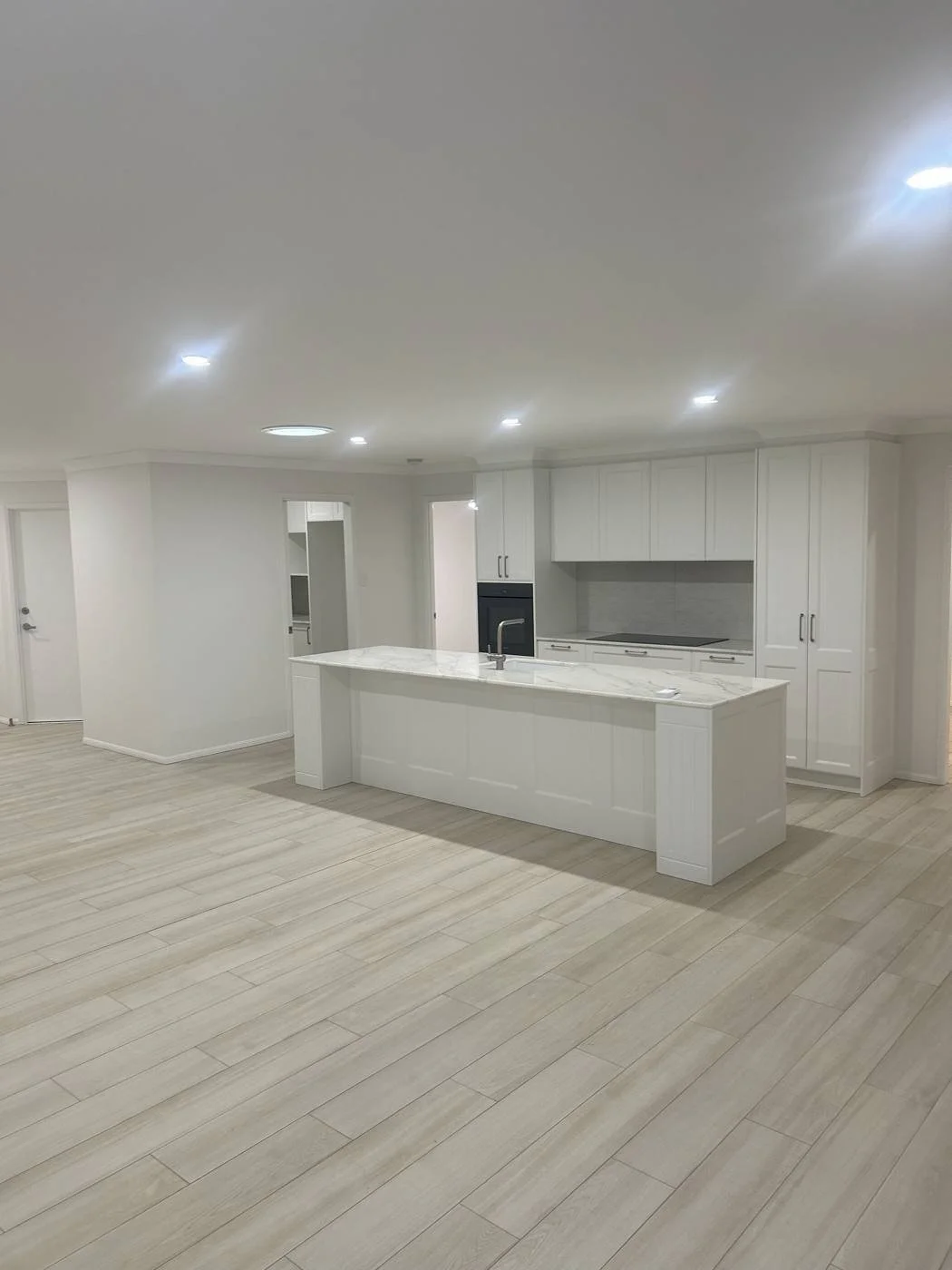
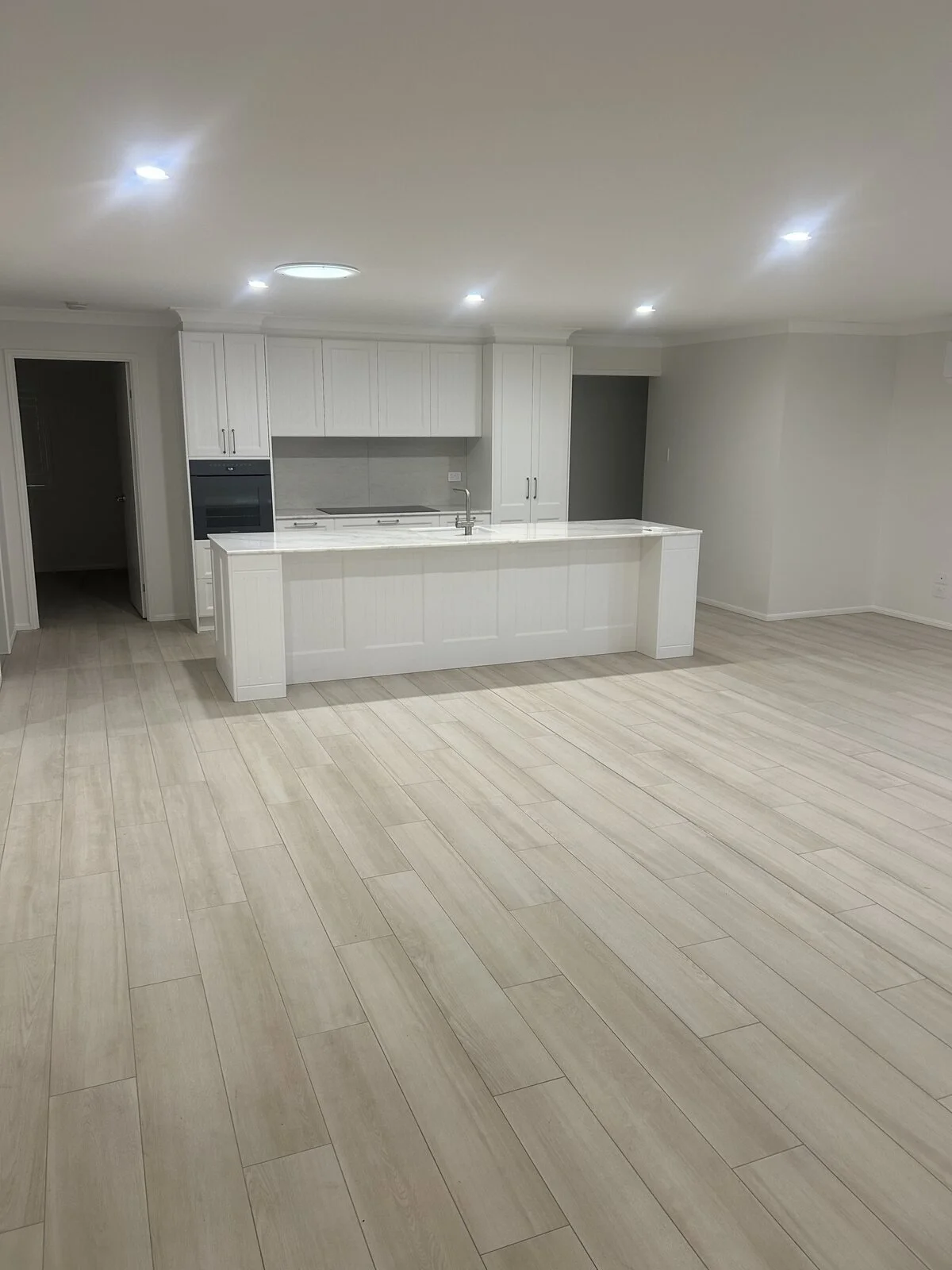
Open-plan kitchen renovation in Toowoomba with white shaker cabinetry, stone island benchtop and timber-look tiled floor

A good kitchen renovation isn't about picking a benchtop and hoping for the best. It's about getting a handful of decisions right before anyone swings a hammer. Here's how we walk clients through it.

Start with how you actually use the kitchen

Before colours and finishes, think about how the room works day to day. Who cooks, and how often? Do you entertain? Do the kids do homework at the bench? Is the fridge in the way every time someone opens the pantry?

Write down what frustrates you about the current layout. Those frustrations are the brief. A kitchen that photographs well but makes you walk the long way around the island isn't a good kitchen, and it's much cheaper to fix on paper than after the cabinets are in.

Layout comes before looks

The big question is whether you're keeping the existing footprint or changing it. Keeping the layout generally keeps the job simpler, because plumbing, power and gas are already where they need to be. Moving the sink, opening up to the living area or adding an island is very doable, but it changes the scope of work.

If a wall is coming out, it needs to be checked properly first. Some walls are only dividing a room. Others are carrying part of the roof, and that's a job for a licensed builder and, where required, an engineer, not a weekend swing with a sledgehammer. Depending on the work, approvals may be needed too, which we help you work through early.

Older homes come with surprises

Toowoomba has plenty of character homes and older builds, and they're great to work on. They can also hide a few things behind the walls: outdated wiring, old plumbing, uneven floors, or materials like asbestos in homes of a certain age. We'd rather tell you that during the site visit than let it blindside you halfway through demolition.

If your home is older, it's worth having that conversation upfront so the plan and the quote allow for what we might find.

Cabinets, benchtops and the things with lead times

This is where kitchens differ from most other jobs. Custom cabinetry, stone benchtops and some appliances are made or ordered to suit, and that takes time. We work with cabinet makers and suppliers, and we'll help you choose materials that suit both your style and how hard your kitchen gets used.

A practical tip: lock in your appliances early. Their exact sizes decide your cabinet dimensions, your power and plumbing points, and your rangehood ventilation. Changing a fridge or oven model late can mean changing the joinery.

How a kitchen renovation runs, step by step

Every job is a little different, but most follow the same order:

  1. A chat and a site visit. We talk through what you want, look at the space, and check the condition of walls, floors, plumbing and electrical.

  2. A clear, fixed-price quote. You get a written scope so you know what's included before you commit. No vague estimates that drift.

  3. Ordering and scheduling. Cabinetry, benchtops and appliances are ordered, and trades are booked in the right sequence.

  4. Strip-out and prep. The old kitchen comes out, and any plumbing, electrical and gas rough-in is done by licensed trades.

  5. Install. Cabinets, benchtops, splashback, appliances and fixtures go in, followed by the final fit-off.

  6. Handover and walkthrough. We go through the finished kitchen with you, check every detail, and sort any final touch-ups on the spot.

Gas, plumbing and electrical work must be done by appropriately licensed trades, and that's built into how we run every job.

Living without a kitchen

This is the part most people underestimate. For a stretch of the project you won't have a working kitchen, and it can feel longer than the calendar says. A little planning goes a long way: a temporary setup with a kettle, microwave and bar fridge, a plan for takeaway nights, and an honest chat about timing, especially around school holidays or events.

We'll talk through dust, noise and access before work starts, so there are no surprises.

Don't forget small business kitchens

Not every kitchen job is a home. A lot of Toowoomba small businesses have tired staff rooms, tea rooms or kitchenettes that haven't been touched in years. A tidy, functional break area makes a real difference to staff, and it's the kind of small commercial job bigger builders tend to pass over. If that's you, we're happy to take a look.

Thinking about renovating your kitchen?

The best way to get an accurate picture of your kitchen renovation is to talk through your specific space. If you're ready to start the conversation, get in touch with Toowoomba Renovations for a fixed-price quote, no obligation, no pressure. And if a bathroom is on the list too, here's how a bathroom renovation works.

Toowoomba Renovations Pty Ltd holds a current QBCC Builder – Low Rise Residential licence (15059227).

Read more renovation advice

Bathroom Renovations in Toowoomba: What to Expect and How the Process Works

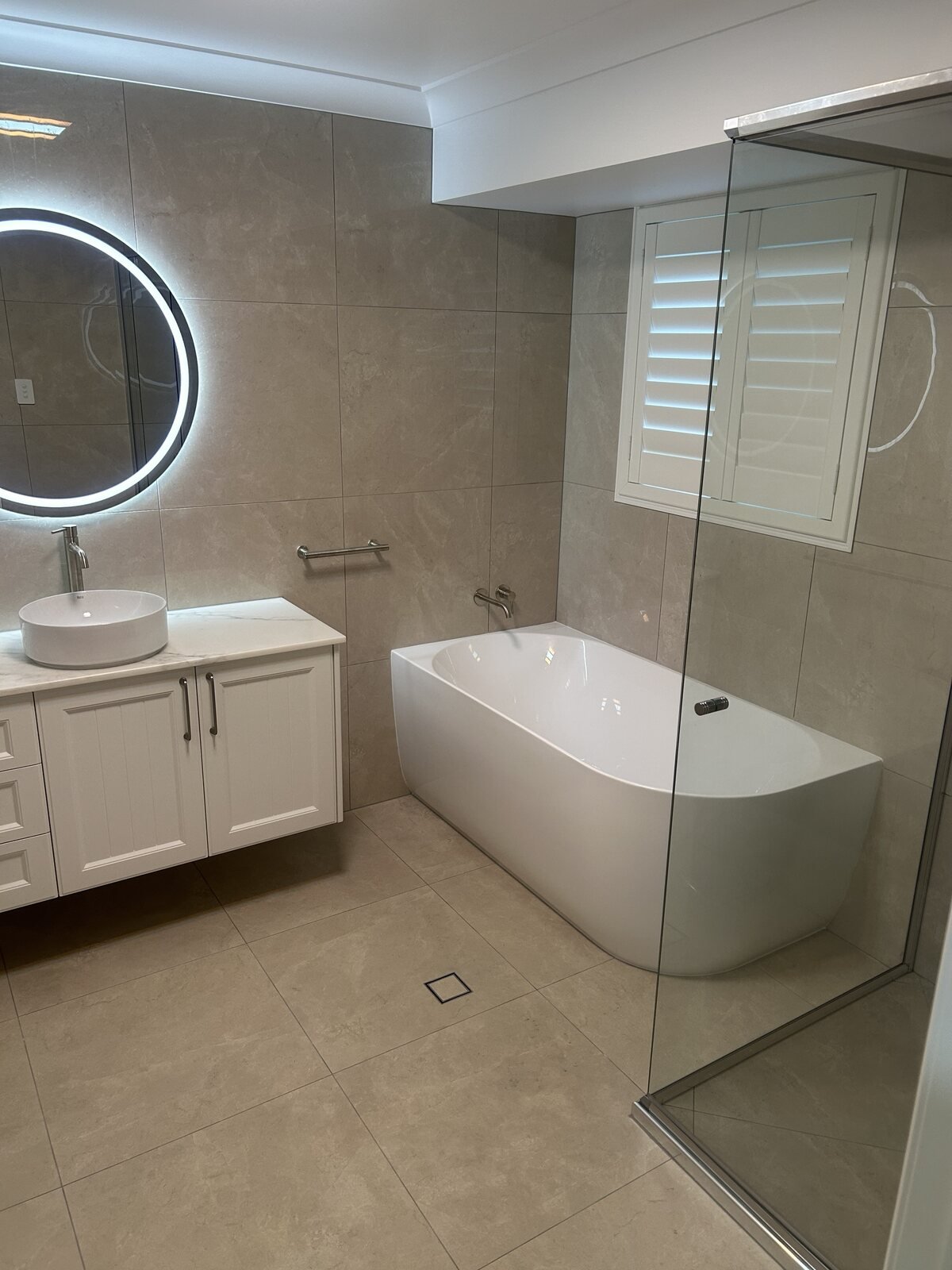
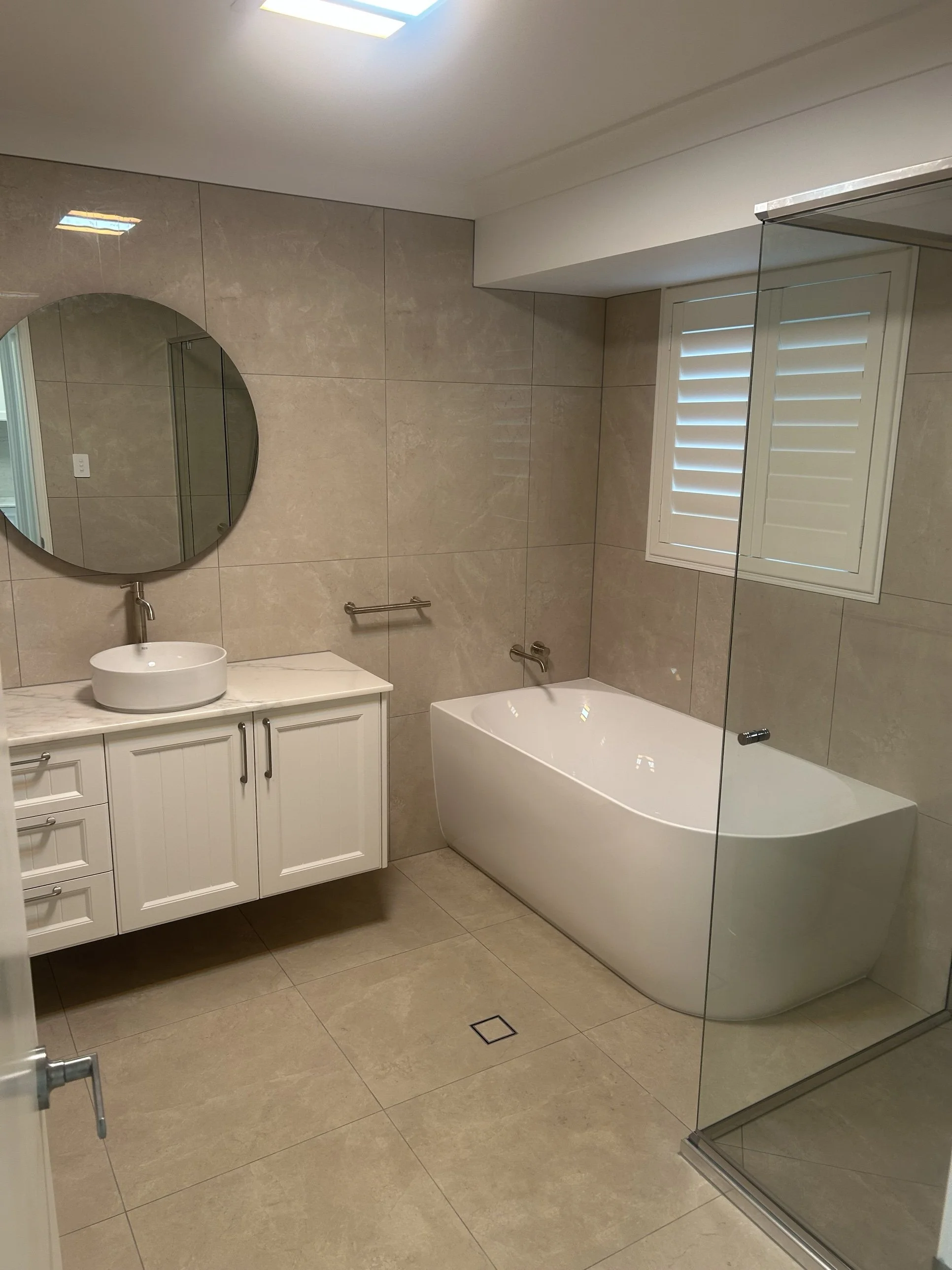
Finished bathroom renovation in Toowoomba with freestanding bath, wall-hung vanity, round mirror and large format tiles

A bathroom renovation is one of the most popular jobs we take on for homeowners across Toowoomba and the Darling Downs, and for good reason. It's a room you use every single day, and an outdated, leaky or poorly laid out bathroom is a genuine daily frustration. A well-planned renovation doesn't have to be stressful, as long as you know roughly what's coming.

If you're weighing up a bathroom renovation and not sure where to start, here's an honest look at how the process actually works.

Why bathroom renovations are different from other rooms

Bathrooms are small, but they're among the most technically demanding rooms in any home. You're dealing with waterproofing, plumbing, drainage falls, electrical work around wet areas, ventilation and tiling, all packed into a tight space. Get any one of those wrong and you're looking at problems well beyond cosmetics, including water damage to the rest of the house.

That's exactly why waterproofing and compliance matter so much, and why it's worth using a QBCC-licensed builder rather than relying on a patchwork of unlicensed trades. Toowoomba Renovations Pty Ltd holds a current QBCC Builder – Low Rise Residential licence, which means the waterproofing, structural and compliance side of your bathroom is handled properly from the outset, not left to chance.

Step one: a chat about what you actually want

Every renovation starts with a conversation, not a contract. We want to know how you use the space, what's frustrating you about the current layout, and what you're hoping to get out of the new one. Are you after a bigger shower, better storage, improved accessibility, or simply a tired, dated bathroom brought up to scratch? There's no need to arrive with a finished design. Plenty of our clients start with a Pinterest board and a rough idea, and we help shape that into something workable.

Step two: a site visit and a proper look at what's involved

Photos and measurements only tell you so much. A site visit lets us check the condition of the existing waterproofing, plumbing locations, wall and floor structure, and anything hiding behind the tiles that could affect the scope of work. Older Toowoomba homes in particular can have surprises once the old tiling comes off, so this step matters. It's also where we talk through practical options for layout, fixtures and finishes based on your budget and the bones of the house.

Why that online inspiration photo might not translate directly

Plenty of our clients arrive at that first conversation with a folder of photos pulled from Pinterest, Instagram or overseas renovation shows, and that's a great starting point for working out what you like. But it's worth knowing early on that not every layout you see online will be achievable, or compliant, in a Queensland bathroom.

Australia has its own building standards covering bathrooms specifically, including the National Construction Code and Australian Standards such as AS 3740 for waterproofing in wet areas. These cover things like ventilation requirements, how wet areas are sealed, and the falls and drainage needed to keep water moving to the outlet rather than pooling or finding its way into the floor below.

A lot of the sleek, completely flush, frameless walk-in showers you see in overseas photos are designed around different codes, different climates and different plumbing conventions. Whether that exact look is achievable in your home depends on your floor structure, the fall available to the drain, and what's compliant for your particular slab or subfloor. The same goes for layouts that squeeze fixtures closer together than Australian standards allow.

This is exactly why the site visit and design conversation matter. We'd rather tell you upfront that a layout needs tweaking to meet Australian standards than let you fall in love with a photo we can't deliver safely or legally. In most cases there's a compliant way to get close to the look you're after, even if the exact execution has to change a little to suit your home.

Step three: a clear, fixed-price quote

Once we understand the scope, we put together a detailed, fixed-price quote rather than a vague estimate. This covers demolition, plumbing and electrical work, waterproofing, tiling, fixtures, and finishing. We'd rather spend the time getting the quote right upfront than surprise you with blowouts halfway through the job. If you want exact figures for your bathroom, the best move is to get in touch and we'll arrange a quote tailored to your home.

Step four: the build itself

With the quote agreed and scheduling locked in, the physical work generally follows this order:

Demolition and strip-out comes first, clearing the old fittings, tiles and sometimes fixtures right back to the studs if a full renovation calls for it. Rough-in work follows, where plumbing and electrical services are repositioned or upgraded to suit the new layout, and this is also when any structural or framing changes happen. Waterproofing is applied next, and this is genuinely the most important stage of the whole job, since it protects your home from water damage for decades to come. Tiling and fit-off come after that, covering floor and wall tiles, then the vanity, toilet, shower screen, tapware and any other fixtures. Finally there's the finishing stage, which covers painting, silicone sealing, door fitting and a thorough clean so the room is ready to use.

Most bathroom renovations take a few weeks from strip-out to completion, depending on the scope of work and whether any structural surprises turn up along the way. We'll always talk you through realistic timing for your specific job before work starts, rather than giving you a generic number that doesn't account for your home.

Step five: handover and a final walkthrough

Before we call the job done, we walk through the finished bathroom with you to check every detail, from grout lines to how the new shower drains. Any loose ends get sorted on the spot. You should walk away confident that the work has been done properly and compliantly, by a licensed builder who stands behind it.

Living with the mess: what to expect day to day

Bathroom renovations are noisy and dusty, there's no way around that. If it's your only bathroom, we'll talk through practical workarounds before work starts, so you're not caught off guard partway through.

A growing option for Toowoomba businesses too

While most of our bathroom renovation work is residential, we're also seeing more small business owners across Toowoomba and the Darling Downs upgrading staff and customer amenities, particularly in older commercial buildings where bathrooms haven't been touched in years. It's a job the bigger commercial builders tend to overlook, which is exactly where a licensed local renovation builder can help.

Thinking about renovating your bathroom?

Every Toowoomba home is a little different, and the only way to get an accurate picture of cost and timing is to talk through your specific bathroom. If you're ready to start the conversation, get in touch with Toowoomba Renovations for a fixed-price quote, no obligation, no pressure.

Read more renovation advice

Full Home Renovation Checklist for Toowoomba Homeowners


Completed full home renovation in Toowoomba by Toowoomba Renovations

A full home renovation is a big job. It touches nearly every part of your house, and it usually means living through some disruption while it happens. The good news is that most of the stress comes from surprises, and most surprises can be avoided with good planning up front.

Here's the checklist we'd walk any Toowoomba homeowner through before the first wall comes down.

1. Get Clear on What You Actually Want

Start with the why. Are you after more space, a better layout, a modern kitchen and bathrooms, better energy performance, or all of the above? Write down your must-haves, your nice-to-haves, and the things you're happy to give up if the budget gets tight. If a bathroom is high on your list, see our guide to how bathroom renovations in Toowoomba work, stage by stage.

Collect photos of finishes and layouts you like. It saves hours of back-and-forth later, and it helps a builder understand your taste faster than any description.

2. Set a Realistic Budget (and a Buffer)

Work out what you can comfortably spend, then hold some back. Even on a well-planned job, there can be unknowns, especially in older homes where you can't see what's behind the walls until work starts. A contingency buffer means a surprise is an inconvenience, not a crisis.

Be upfront with your builder about your budget. A good builder would rather know your number early and tell you what's achievable than quote a dream scope you can't afford.

3. Check Your Approvals Early

Most full renovations need some level of approval, and the requirements depend on what you're changing. Structural work, extensions, and changes to plumbing, drainage or the building's footprint will generally need approvals before work can begin. Your builder should help you work out what's required for your project and for your property in the Toowoomba region, so find out early, because approvals can add time to your schedule.

4. Choose a Licensed Builder and Check Their Details

In Queensland, you want a builder who holds the right licence for the work, and you can check that yourself through the QBCC. Ask to see their licence number, ask about insurance, and ask to talk to past clients or see recent local work.

At Toowoomba Renovations, we're QBCC licensed (licence 15059227), and we're always happy for clients to check us out before signing anything. Any builder worth hiring will say the same.

5. Get a Fixed Quote in Writing

For a full renovation, you want a clear, written scope and a fixed quote, so you know what's included, what isn't, and how variations will be handled if you change your mind mid-job. Check that it covers the things that matter to you: demolition and waste removal, structural work, trades, fixtures and finishes, and who's responsible for what.

If two quotes are very different, compare the scopes line by line rather than just the totals. A lower figure often means something has been left out.

6. Plan the Timeline and Where You'll Live

Ask your builder for a realistic timeline broken into stages, and ask what could cause delays. Weather, approvals, material lead times and trade availability can all move dates around, and the more you understand that early, the less frustrating it feels.

Decide whether you'll stay in the house during the work or move out. For a full renovation, many families find it easier and safer to relocate for at least part of the build. If you're staying, talk to your builder about how access, dust, noise and temporary kitchen or bathroom arrangements will be managed.

7. Lock In Your Selections Before Work Starts

Tiles, tapware, cabinetry, flooring, paint colours, lighting and appliances all have lead times, and delays on selections are one of the most common reasons a job runs late. Choose and order what you can before the build starts, and confirm your decisions in writing so nothing gets mixed up on site.

8. Prepare Your Home and Your Household

Before the work begins, clear out the areas being renovated, protect belongings you're keeping, and sort out how pets, kids and daily routines will cope with a building site. Agree on how you and your builder will communicate during the job, whether that's a weekly catch-up, a site meeting, or a quick message each day.

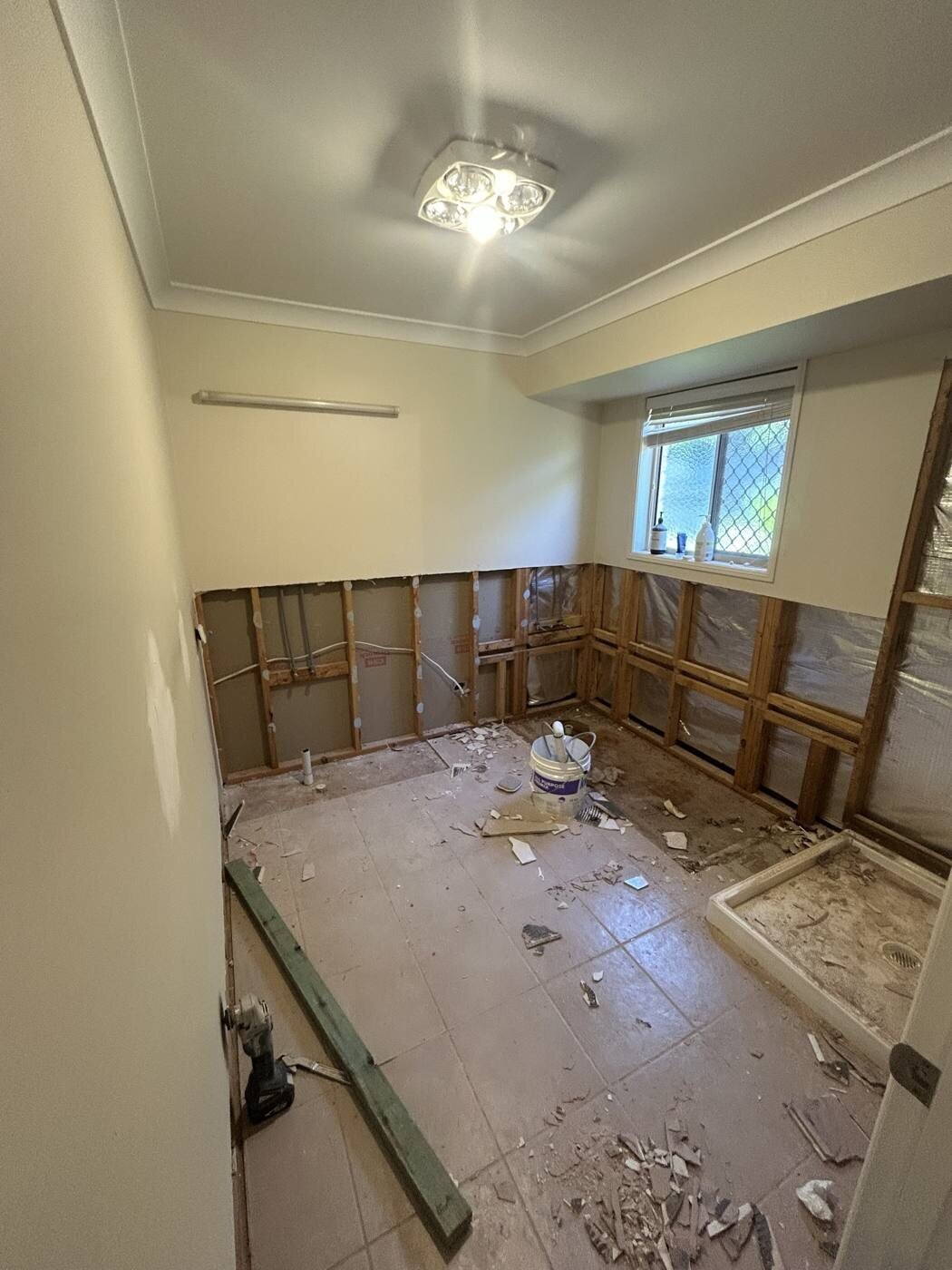
Bathroom stripped back to the frame during a full home renovation in Toowoomba

9. Stay Involved During the Build

You don't need to hover, but regular check-ins help. Walk the site with your builder at key stages, ask questions if something doesn't match the plan, and raise concerns early, while they're easy to fix.

10. Do a Proper Handover

At the end of the job, do a thorough walk-through with your builder. Check finishes, operation of fixtures, and anything on your original scope. Note anything that needs fixing, and make sure you get the paperwork, warranties and care instructions you need to look after your new spaces.

Finished bathroom with LED mirror, vanity and freestanding bath after a full home renovation in Toowoomba

Thinking About a Full Renovation in Toowoomba?

If you're planning a full home renovation in Toowoomba or around the Darling Downs, we'd love to hear what you have in mind. Get in touch for a fixed quote and we'll talk through your plans, what's realistic, and what to expect from start to finish.

Read more renovation advice

Structural Office and Shopfront Renovations in Toowoomba


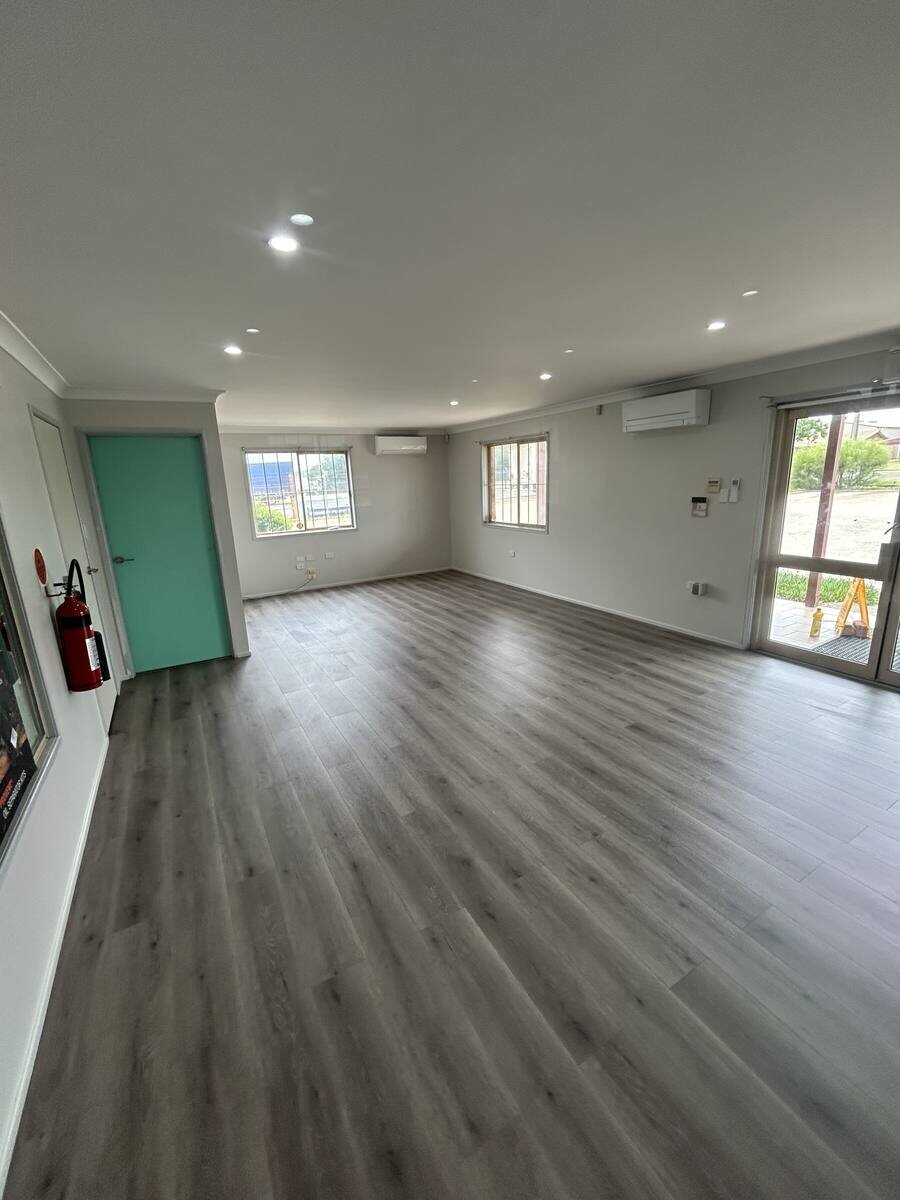
Shopfront renovation in Toowoomba completed by Toowoomba Renovations

If you run a small business in Toowoomba and you've been putting off renovating your premises, there's a good chance the plan in your head starts with the visible stuff — new paint, signage, a fresher-looking counter or reception area. That's understandable, but it's usually the wrong place to start. Most premises that need renovating have an underlying layout or structural issue driving the problem, and dressing over that without fixing it first rarely holds up, and rarely solves what's actually frustrating you about the space.

Small commercial jobs like these sit in a gap that a lot of bigger commercial builders aren't interested in filling. That's the gap we've built our business around — and it's why we tend to steer business owners toward the structural conversation first, before anything cosmetic.

Structural Work Comes First, for a Reason

Cosmetic fit-out work — new finishes, signage, glazing, paint — is work we do, and it matters for how a space presents to customers and staff. But it's rarely worth doing in isolation. If your floor plan doesn't work, if there's a wall in the wrong place, if the space hasn't been laid out for how the business actually operates day to day, then a cosmetic refresh just makes an underlying problem look tidier for a while. The layout issue is still there underneath it.

That's why, when a business owner comes to us wanting a refresh, one of the first things we do is look at whether there's a structural or layout change that should happen first. Sometimes there isn't, and a straightforward fit-out is genuinely the right call. Often, though, there's a wall that's been in the wrong place for years, a floor plan that was never designed for the business currently operating in it, or simply not enough space for how the business has grown — and that's the work worth prioritising.

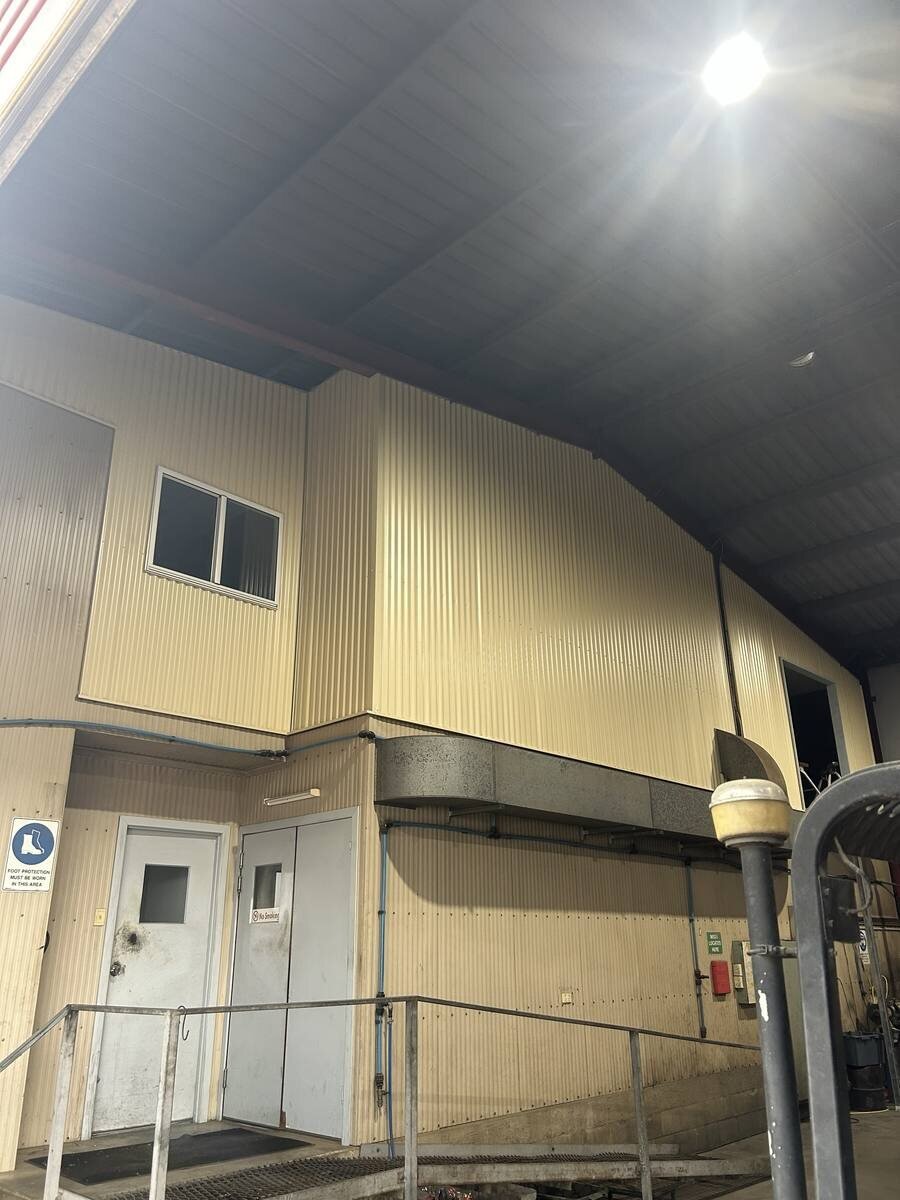
Completed mezzanine office wall built inside a commercial workshop in Toowoomba

Layout and Structural Reconfiguration

A lot of small commercial premises around Toowoomba are working with a floor plan inherited from a previous tenant or a different kind of business entirely. Reworking that layout properly is structural work: removing or relocating internal walls, assessing what's load-bearing before anything comes out, reconfiguring how staff and customers move through the space, and rebuilding the framing and services around the new layout rather than just patching what's left.

This is where an experienced, QBCC-licensed builder earns their place on the job. Knowing what's structural, what's load-bearing, and how a change in one part of the building affects another isn't something you want to get wrong on a commercial premises with staff and customers moving through it every day.

Extensions: Growing Into the Space You Actually Need

For a lot of small businesses, the real problem isn't the finish of the existing space — it's that there simply isn't enough of it. An office that's outgrown its footprint, a retail space that needs more back-of-house storage, a business that's added services or staff faster than its premises kept up: these are extension conversations, not fit-out conversations.

A commercial extension involves the same fundamentals as a residential one — footings, structural framing, roof and wall tie-ins, services extended into the new area — but with commercial-specific considerations layered on top, including how the extension affects fire egress, accessibility paths, and compliance ratings for the building as a whole. Getting this right from the structural stage onward matters more here than almost anywhere else in the job, because retrofitting compliance into a commercial extension after the fact is far harder than building it in from the start.

Compliance Is a Structural Issue, Not a Finishing One

A mistake we see often is business owners treating compliance — accessibility, fire safety, egress paths — as something to sort out at the end, alongside signage and paint. In reality, most of these requirements are structural. Doorway widths, ramp gradients, fire-rated wall requirements, and safe egress paths all need to be built into the structure and layout of the space, not bolted on afterwards. A renovation that starts with layout and structure gets these right as part of the build; one that starts with cosmetics usually has to backtrack.

Staying Open While the Structural Work Happens

Structural changes to an operating business are more disruptive than a coat of paint, which is exactly why they need proper planning. Staging the work in sections, scheduling the noisiest or most disruptive stages outside trading hours, and sequencing the job so essential areas stay usable throughout are all things we work through with you before the job starts, not improvised once walls are already open.

Why This Matters for Getting the Job Right

We're not against making a space look good — that's a genuine part of the job too. But we'd rather have the conversation about what's structurally driving the problem before quoting a fit-out that won't actually fix it. Toowoomba Renovations Pty Ltd holds QBCC licence 15059227, and our focus with small commercial work is on getting the structural and layout fundamentals right first, so whatever finish work follows is built on something solid rather than papering over a problem that will resurface.

Getting Started

If your office or shopfront has been frustrating you for a while, it's worth having the structural conversation before committing to a purely cosmetic refresh. A walkthrough of your premises lets us assess what's actually driving the problem and put together a fixed-price quote based on what your space genuinely needs.

Get in touch with Toowoomba Renovations Pty Ltd to arrange a quote for your Toowoomba or Darling Downs business. We're glad to take on the structural work the bigger builders skip past.

Read more renovation advice

Renovating an Older Home in Toowoomba: What to Check Before You Start


Renovated older home in Toowoomba by Toowoomba Renovations

Toowoomba has no shortage of older homes with real character — high ceilings, timber floors, wide verandahs, the kind of details you can't easily buy in a new build. It's a big part of why so many homeowners choose to renovate rather than knock down and start again. But older homes come with their own quirks, and knowing what you're dealing with before the tools come out saves a lot of stress (and money) later on.

If you're weighing up a renovation on a character home in Toowoomba or anywhere across the Darling Downs, here's what actually matters.

Stumps and Subfloor Come First

A lot of Toowoomba's older homes are still sitting on timber stumps, some of them original. Before any renovation plan gets locked in, it's worth having the subfloor properly checked — stump condition, ventilation, signs of movement or termite activity. Queensland's climate and soil movement aren't always kind to timber subfloors, and it's far easier to deal with restumping or reblocking as its own job than to discover it halfway through a kitchen renovation.

This is also where a lot of homeowners get caught out on cost. A subfloor issue found early is a line item. Found late, it can hold up everything else on site.

Wiring and Plumbing Rarely Match the House's Age

Older homes have usually been added to, rewired in parts, and re-plumbed piecemeal over decades — sometimes by the book, sometimes not. Before committing to a full renovation scope, it's worth getting a clear picture of what's actually behind the walls. Old wiring that hasn't been touched in a long time, or plumbing that's been patched rather than properly replaced, can turn a straightforward renovation into a bigger job than expected.

None of this is a reason to avoid renovating an older home — it's just part of scoping the job properly from day one, rather than finding it out with the walls already open.

Roof, Windows and the Building Envelope

Older roofs, single-glazed timber windows, and gaps around doors and eaves all affect how comfortable a home is once the renovation is finished — especially through a Toowoomba winter. If a renovation is touching the roofline or opening up walls, it's usually worth reviewing insulation and sealing at the same time, rather than treating it as a separate job down the track.

Character Features Are Usually Worth Keeping

Ornate cornices, VJ walls, timber doors, fretwork — these are the details that give an older Toowoomba home its value and its appeal, and they're rarely worth ripping out just because a renovation is happening nearby. A good renovation plan works around these features, restoring or matching them where needed, rather than defaulting to replacing everything with something new. It's usually more cost-effective too, and it keeps the home feeling like itself once the work is done.

Getting a Straight Answer on Scope

The honest answer with older homes is that nobody can tell you exactly what's behind every wall until it's opened up. What a good builder can do is inspect properly before quoting, flag the likely risk areas up front, and price the job as a fixed quote so you know where you stand before work starts — rather than an open-ended hourly arrangement that leaves you guessing.

That's how we approach it at Toowoomba Renovations. We're a QBCC-licensed builder (licence 15059227) working across residential renovations and extensions in Toowoomba, and character homes are a regular part of what we do. We'd rather spend the time properly assessing an older home upfront than surprise a client with scope creep once the job's underway.

Thinking About Renovating an Older Home?

If you've got an older home in Toowoomba or the surrounding Darling Downs area and you're weighing up a renovation, get in touch for a fixed quote. We'll have a look at what you're working with, talk through what's realistic, and give you a straight answer on scope and price before anything gets started.

Read more renovation advice